Why You Shouldn’t Use a Handyman for Roof Repairs
Handyman patches might feel cheap, but on roofs they often cost HOAs and homeowners more. Learn when to stop repairing and start planning for replacement.
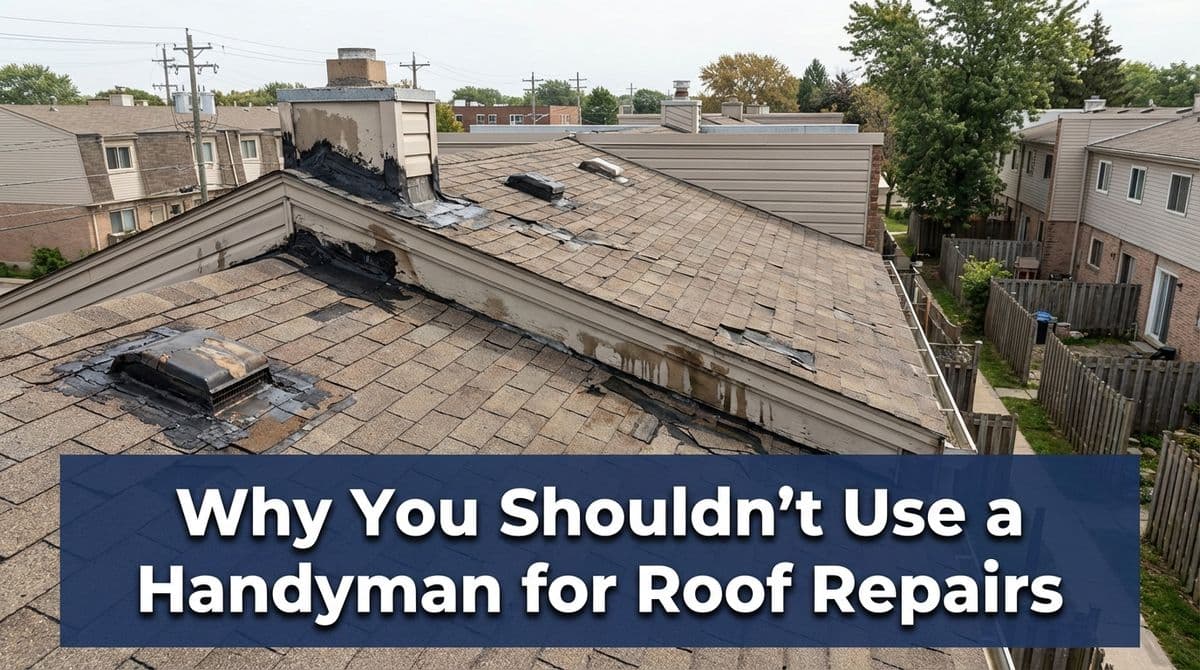
“We’ve Got to Stop Calling Handymen for the Roof”
We recently got a call from a customer — let’s call her Lisa — who was juggling two roofing worries at once. First, she had a 20-year-old shingle roof on a small home under contract. The inspector was on site and told her, “It’s gone — the tabs are lifting, it’s shot.”
While we were setting up that estimate, Lisa mentioned she also sits on the board of her condo association. For years, the board had been calling handymen for “quick fixes” whenever a unit leaked. Now they were facing repeated issues across multiple buildings and she said, almost exasperated, “We’ve got to stop this — it’s costing us money.”
Her instinct was exactly right. Those little handyman patches might feel cheaper in the moment, but on roofs, they’re often the most expensive option in the long run — especially for HOAs and condo communities.
Why a Handyman Shouldn’t Be on Your Roof
There’s nothing wrong with a good handyman for small jobs around the house. But roofing is a different animal. When we got Lisa’s call, her inspector had already noticed lifted tabs on a 20-year-old shingle roof — a classic sign that the system is nearing the end of its life. That’s not a “caulk and go” situation.
Here’s what can go wrong when non-roofing pros work on your roof:
- Improper materials: Using generic sealants, mismatched shingles, or wrong fasteners can trap moisture, accelerate deterioration, and make later repairs harder.
- Voided warranties: Many manufacturer and workmanship warranties require that repairs be done by licensed roofing contractors. A handyman’s work can void coverage you paid for.
- Hidden damage missed: Roofers are trained to look beyond the obvious leak — checking underlayment, decking, flashing, and ventilation. A quick surface patch can hide deeper problems until they’re much worse.
- Insurance headaches: If there’s a claim later (storm, interior damage, etc.), insurers may deny or reduce coverage if unqualified people have been working on the roof.
- Safety concerns: Roofing requires fall protection, proper ladders, and experience on steep or high surfaces. An accident on your property can become a major liability issue for HOAs and homeowners.
On a single-family home, that’s bad enough. On a multifamily building with shared roofs, it multiplies across every unit that’s been “patched.”
How “Small” Handyman Repairs Turn Into Big Bills
Lisa’s condo board had been calling different handymen every time a resident reported a ceiling stain. A little tar here, a shingle there, maybe some caulk around a vent. Each individual invoice was small — but the total cost (and damage) added up.
We’ve seen this pattern many times:
- Leaks pop up in one unit → handyman patch.
- A few months later, another unit in the same building leaks → another patch.
- Over a few years, dozens of little repairs are spread across roofs that are already nearing the end of their life.
Eventually, like the Siesta complex we worked on recently, boards get tired of pouring money into short-term fixes in “a million different condo units” and finally authorize full replacement. When we tear off the old roofs, we often find:
- Soft or rotted decking under old patches
- Improperly sealed penetrations leading to mold in attic spaces
- Multiple roofing “layers” and incompatible materials stacked together
All of that could have been addressed more efficiently — and usually more affordably — with a planned roofing project instead of years of piecemeal handyman work.
Signs Your Roof Is Beyond Another Patch
Lisa’s home under contract was a textbook example: a 20-year-old shingle roof with lifted tabs that the inspector flatly called “gone.” At that point, patching isn’t protecting the buyer or the seller; it’s just delaying the inevitable.
Whether you’re a homeowner or on an HOA/condo board, look for these signs that it’s time to talk replacement, not repair:
- Age 20+ years (for shingles): In our climate, a 20-year-old shingle roof is usually at or beyond its designed service life.
- Lifted, curling, or missing tabs: Shingles that don’t lie flat anymore can’t shed water properly and are vulnerable to wind damage.
- Widespread granule loss: Bald-looking shingles or lots of granules in gutters indicate UV damage and reduced protection.
- Recurring leaks in multiple units: If different condo units in the same building report leaks over time, the system itself is failing, not just one spot.
- Patchwork appearance: Lots of mismatched shingles or tarred areas are a clue that the roof has been “chased” for leaks instead of properly restored.
One or two of these issues might still be repairable. But when you’re checking several boxes on this list, your money is better spent planning for a new roof.
How Boards Should Think About the “Tipping Point”
During our conversation, Lisa said she wanted her board to find “a go-to roofer” instead of just calling whomever could show up with a ladder. That’s exactly what successful associations do — they step back and look at the big picture.
Here’s how we encourage HOAs and condo boards to think about the repair vs. replace decision:
- Track all roof-related costs: Add up handyman invoices, interior repairs, mold remediation, and insurance deductibles for leaks over the last 3–5 years.
- Compare to replacement: Get a detailed proposal for full replacement, including projected lifespan and warranty coverage.
- Look at risk, not just cost: Consider the likelihood of more leaks, resident disruption, and potential legal issues if problems keep recurring.
- Plan, don’t react: A scheduled roof project with proper bidding and reserves is almost always cheaper and smoother than emergency replacements after major failures.
Why Experience With Multifamily Roofing Matters
When Lisa asked if we handle condo and villa associations, we told her about a large coastal complex we’d just completed — “a monstrous project,” as we described it. Multifamily roofing isn’t just bigger; it’s more complex:
- More penetrations: Shared walls, multiple HVAC units, vents, and skylights all require careful detailing.
- Resident coordination: Access, noise, and scheduling have to be managed to minimize disruption.
- Documentation: Boards need clear scopes, photos, warranties, and communication for members and insurers.
That’s why it’s critical to hire a licensed, insured roofing contractor with verifiable multifamily/condo experience. Ask for references, proof of insurance, and examples of similar projects they’ve completed.
Practical Steps to Evaluate and Plan a Roof Replacement
If your association or home is starting to look like Lisa’s situation, here’s a straightforward path forward:
- Schedule a professional roof inspection: Have a roofing contractor walk the roofs, document conditions with photos, and provide a written report.
- Prioritize buildings: For condos, not every building may need replacement immediately. A good roofer will help you phase the work based on condition.
- Gather multiple bids (from roofers, not handymen): Make sure each proposal includes materials, underlayment, ventilation upgrades, flashing details, and warranties.
- Review with your board or family: Look beyond lowest price. Consider experience, insurance, references, and clarity of scope.
- Build a funding plan: For HOAs, coordinate with your reserve study; for homeowners, talk with your lender or realtor if you’re in a sale situation.
When Lisa called about that 20-year-old roof with lifted tabs, we headed out the same day to give her the information she needed — not just for that one home, but for her entire condo community. That’s what a true roofing partner does: helps you move from band-aid fixes to long-term protection.
If you’re tired of chasing leaks with handyman patches, it might be time to step back, get a professional assessment, and put a real roofing plan in place.